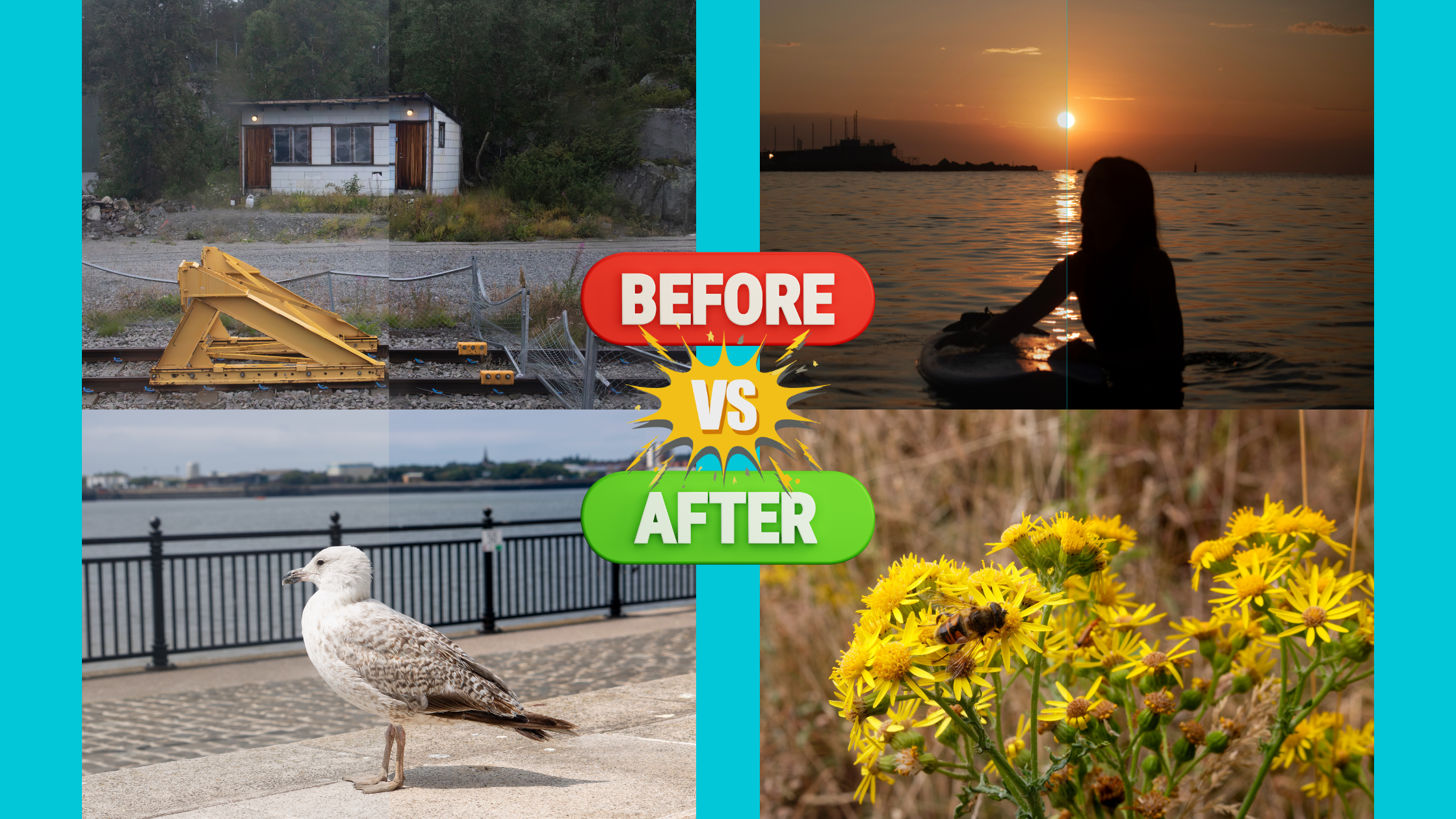
One of the most frequent questions photographers hear is: “Why edit the photos?” or even, “Isn’t editing cheating?”
Chapter 1: What a Camera Sees vs. What a Human Sees
Cameras don’t “see” the world the way our eyes do; they simply measure and capture light. The human eye operates with a dynamic range of roughly 20 to 24 stops, allowing our visual system to adapt in real time to harsh shadows, bright skies, and spatial depth. Modern digital camera sensors, by contrast, generally top out at a dynamic range of 10 to 14 stops. That mechanical limitation means a digital sensor cannot adjust its exposure on the fly for a bright sky while simultaneously balancing deep shadows under a tree.
A camera cannot perceive mood or create feeling; it merely records cold, mathematical data across a flat surface. At its core, a camera evaluates light by converting scene brightness into a simple grayscale spectrum ranging from 0 (pure black, or zero light) to 255 (pure white, the sensor’s saturation limit). Exposure is calibrated against a neutral baseline known as 18% Middle Gray. The camera’s sensor maps incoming light across this digital scale, producing the tonal distribution curve you see on a histogram.


Chapter 2: What Are RAW and JPEG Files?
A RAW file is uncompressed, unprocessed data recorded straight from the camera sensor, serving as the digital equivalent of an undeveloped film negative. It captures high bit-depth information—storing over 16,000 distinct shades of light per color channel—preserving maximum dynamic range, shadow detail, and highlight recovery latitude. Settings like white balance, contrast, and visual style are stored as flexible metadata rather than permanently burned into the pixels, giving you complete creative control to develop the image in editing software without sacrificing photo quality.
A camera JPEG is a fully processed, “cooked” image file generated by the camera’s internal computer the moment you click the shutter. The camera automatically applies a built-in algorithm for contrast, sharpening, and color saturation, then compresses the image into an 8-bit file (256 shades per channel versus over 16,000 in RAW) while permanently discarding all excess light and shadow data to keep file sizes small. While this makes JPEGs lightweight, universally compatible, and instantly ready to share, that convenience comes at the cost of editing flexibility—attempting to shift exposure or fix white balance later will quickly degrade the image.
The Bottom Line: RAW gives you complete creative control over your final image, while JPEG lets an automated camera algorithm make those decisions for you.
Chapter 3: What Do We Do with RAW Files?
Because a RAW image file is just flat, unprocessed digital data, it isn’t a finished photograph yet. Editing is essential because it bridges the gap between what the camera sensor recorded and what it actually felt like to stand in that space—restoring the true depth, contrast, and mood of the scene.


The main advantage of editing is creative control: it allows you to correct lighting issues, reveal subtle textures, and build a cohesive aesthetic across a project. Some of the most common adjustments include:
- Exposure & Contrast: Balancing overall brightness and deep shadows to give the image depth.
- White Balance: Correcting color temperature so tones look natural and intentional.
- Highlight & Shadow Recovery: Pulling back details in bright skies or dark shadows that the camera missed.
- Color Grading: Tuning specific colors to refine skin tones or create a cohesive mood.
- Detail & Texture: Adjusting sharpness and clarity to make focal points stand out smoothly.
- Targeted Masking: Brightening or darkening specific areas to naturally guide the viewer’s eye.
However, editing comes with a crucial boundary: avoiding the trap of over-processing. Pushing adjustments too far can quickly make an image look plastic or unnatural. Editing requires restraint—knowing when an image feels right without stripping away its realism. Heavy-handed over-processing is usually what causes non-photographers to view editing as fake or “unrealistic.”
Chapter 4: Conclusion
There is a common misconception that editing is “cheating” or inventing things that weren’t there, but post-processing has been an essential part of photography since the early darkroom days of film. Adjusting shadows, tuning color warmth, or cropping for stronger composition isn’t about lying; it’s about compensating for camera hardware limitations. The goal is not to fabricate a fake scene, but to guide the image back to its truest, most authentic state and evoke real emotion in the viewer.
Ultimately, an edited photo isn’t an invention—it’s a finished thought. If you shoot on a smartphone or in JPEG mode, an internal computer is already making automated editing choices for you anyway. Manual editing simply takes that power away from an algorithm and puts it back in human hands, ensuring the final image reflects real emotion and deliberate artistic direction.


Leave a Reply